
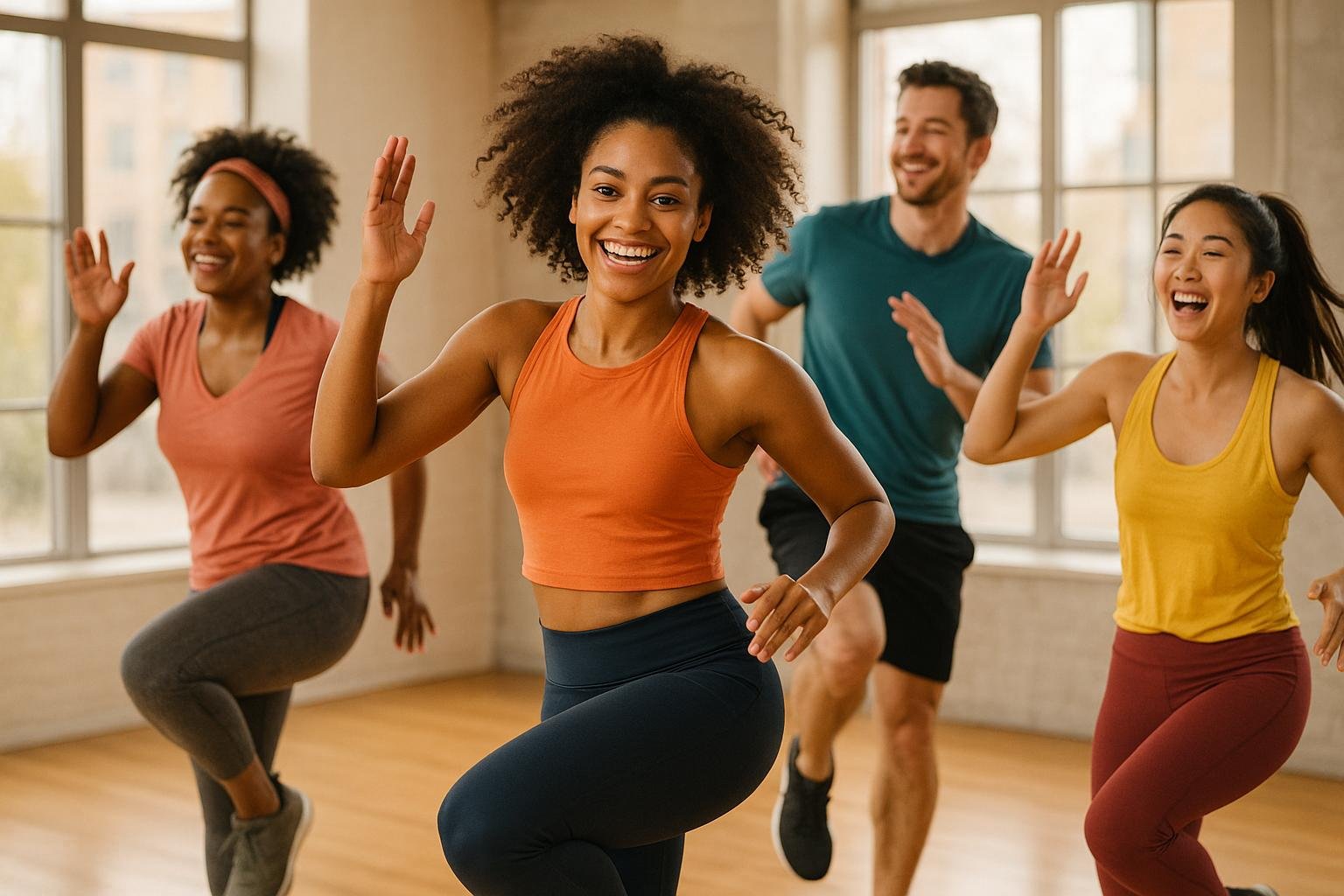
Looking for a workout that’s fun, effective, and easy to do at home? Dance-based cardio might be your perfect fit.
This workout blends energetic dance routines with aerobic exercise, making it a great way to boost heart health, burn calories, and improve mood. Whether you’re a beginner or a fitness enthusiast, dance cardio offers something for everyone. Here’s why it stands out:
- Burns Calories: A 30-minute session can torch up to 300 calories.
- Improves Heart Health: Regular sessions enhance circulation, lower blood pressure, and build endurance.
- Boosts Mood and Brain Function: Dancing releases feel-good chemicals and sharpens memory.
- Accessible for All Levels: No experience or fancy equipment needed – just some space, good shoes, and music.
With minimal setup and plenty of online classes available, you can start anytime. From Zumba to hip-hop and Latin-inspired routines, this workout is designed for movement and enjoyment, not perfection. Ready to get moving? Let’s dive in.
30-Minute All-Levels Cardio Dance Workout
Health Benefits of Dance-Based Cardio
Dance-based cardio combines rhythmic movement with music to provide both physical and mental perks. This engaging workout can improve heart health, burn calories efficiently, and boost your mood.
Better Heart Health and Endurance
Regular dance cardio sessions enhance circulation and help lower blood pressure, making your heart work more efficiently. This type of exercise increases oxygen use, which strengthens your heart and raises energy levels. According to the American Journal of Cardiology, aerobic activities like dance cardio are among the best ways to support cardiovascular health. Over time, these benefits translate to improved stamina for everyday tasks, whether it’s climbing stairs, carrying groceries, or playing with your kids.
Weight Loss and Calorie Burning
Dance cardio is also a fantastic way to burn calories. In just 30 minutes, you can burn up to 300 calories – more than moderate-paced running, swimming, or cycling.
| Activity | Calories Burned (30 minutes) | Key Benefits |
|---|---|---|
| Dance Cardio | Up to 300 | Heart health, endurance, mood |
| Running (moderate) | ~240 | Heart health, endurance |
| Swimming (moderate) | ~210 | Full-body workout, low impact |
| Cycling (moderate) | ~210 | Leg strength, endurance |
| Source: CV Health Clinic, 2023 |
The high calorie burn comes from the dynamic nature of dance. Frequent shifts in direction, speed, and intensity force your body to work harder, making it an effective and enjoyable way to manage weight while keeping your workout routine exciting.
Mental Health and Mood Benefits
Dance cardio isn’t just about physical fitness – it’s a mental health booster too. Dancing triggers the release of dopamine and endorphins, lifting your mood and enhancing mental clarity. The process of learning and memorizing dance routines challenges your brain, much like solving puzzles or crosswords, which can improve cognitive function.
Studies have even shown that dancing may lower the risk of dementia and improve memory. On top of that, dancing at home offers a judgment-free environment where you can build confidence and focus on having fun. By reducing stress – a factor that can strain the heart – dance cardio supports both mental and physical well-being, making it a well-rounded fitness choice.
Getting Started: Basic Moves and Equipment
You don’t need any prior dance experience or fancy gear to dive into dance cardio. It’s all about moving your body and having fun. Start with simple steps that are easy to pick up, and as you grow more confident, you’ll naturally improve your coordination and rhythm.
Simple Dance Moves for Cardio
Here are three basic moves that are staples in most dance cardio routines:
- The Grapevine: Step to the right, cross your left foot behind, step right again, and bring your left foot next to your right. This move not only gets your heart rate up but also helps with coordination.
- The Step Touch: Step to one side, bring your other foot to meet it, and repeat in the opposite direction. It’s a straightforward move, perfect for beginners who want to ease into the rhythm.
- The Mambo: Add a little flair by stepping forward with one foot, rocking back to the center, stepping back with the same foot, and returning to center. Don’t forget to let your hips sway naturally for that extra groove.
You can tweak these moves to suit your fitness level. Beginners might take it slow and keep things low-impact. As you get more comfortable, you can amp things up with faster steps, deeper bends, or energetic arm movements. If mobility is a concern, simplify the steps – like turning the grapevine into a basic side step or doing a gentle forward-and-back rock for the mambo. There’s even the option of seated routines for those who need it.
Once you’ve nailed these basics, it’s time to prepare your space for a safe and effective workout.
Equipment and Space Setup
One of the best things about dance cardio is how little equipment you need. A good pair of supportive athletic shoes is essential to protect your feet and joints while preventing slips. Wear breathable workout clothes that allow you to move freely, and always keep a water bottle handy to stay hydrated.
If you want to take things up a notch, consider a few extras: a yoga mat for warm-ups and cool-downs, and a portable speaker or quality headphones to keep your music clear and motivating.
Setting up your workout space is just as important. Clear a flat, non-slip area – at least 6×6 feet – free of furniture, rugs, or anything else that could trip you up. Hardwood floors or low-pile carpet work best for stability. Here’s a quick guide to creating a safe space:
| Space Requirement | Recommendation | Safety Benefit |
|---|---|---|
| Floor Surface | Hardwood or low-pile carpet | Prevents slips and ensures stability |
| Clear Area | Minimum 6×6 feet | Allows full range of motion |
| Lighting | Bright, even lighting | Helps you monitor your form and avoid obstacles |
| Ventilation | Good airflow or a fan | Keeps you cool and prevents overheating |
Bright lighting and good airflow are key for comfort and safety. If you can, use a mirror to check your posture and form. And don’t underestimate the power of music! Upbeat songs with a strong, steady beat can make your workout more engaging and effective. Faster tracks are great for high-energy sessions, while slower ones are ideal for warm-ups or beginners. Customizing your playlist with songs you love can turn your workout into something you look forward to.
According to Indoor Cardio Pro, creating a safe and comfortable workout environment is essential for preventing injuries and making the most out of your dance cardio routine. It’s all about setting yourself up for long-term success while keeping things enjoyable.
sbb-itb-9317277
Workout Routines and How to Progress
Now that you’ve got the basics down, it’s time to bring everything together into a structured routine. A well-thought-out plan not only keeps you engaged but also ensures your dance cardio workouts are effective and enjoyable. The secret? Progressively challenging yourself while maintaining a sense of fun.
How to Structure a Dance Cardio Session
An effective dance cardio session typically follows a four-part structure. This setup mirrors the flow of a professional fitness class, ensuring your body gets a balanced workout from start to finish.
Start with a 5–10 minute warm-up to ease your body into motion. This phase gently prepares your muscles and joints for the intensity ahead. Simple moves like marching in place, arm circles, or dynamic stretches (think leg swings) work great here. The goal? Raise your heart rate gradually and get your blood flowing – without wearing yourself out.
Next comes the main routine, the heart of your session. This 20–40 minute segment is all about high-energy dance sequences set to upbeat music. If you’re new to dance cardio, aim for 20 minutes to focus on mastering the basics. As your stamina improves, extend this to 30 or even 40 minutes. Keep the pace lively enough to elevate your heart rate, but always prioritize good form.
After the main event, transition into a 5–10 minute cool-down. This part helps your body shift back to a resting state. Slow, flowing movements like gentle swaying or deep breathing exercises are perfect for gradually lowering your heart rate and avoiding dizziness.
Wrap things up with 5 minutes of stretching to support recovery and improve flexibility. Target the muscle groups that worked the hardest – calves, hamstrings, hip flexors, and shoulders are usually the key areas.
| Session Component | Duration | Purpose |
|---|---|---|
| Warm-up | 5–10 minutes | Prepare muscles and joints |
| Main Routine | 20–40 minutes | High-energy dance sequences |
| Cool-down | 5–10 minutes | Gradually lower heart rate |
| Stretching | 5 minutes | Enhance flexibility and recovery |
This structure is flexible and can be adjusted to fit your fitness level. Once you’ve nailed the basics, you can start ramping things up.
How to Increase Difficulty Over Time
The beauty of dance cardio lies in its adaptability. As you gain confidence and improve your fitness, you can tweak your routine to keep things challenging and exciting.
One way to step things up is by increasing intensity. Add more dynamic arm movements, deepen your lunges or squats, or simply pick up the pace. For instance, a simple step-touch can transform into a high-energy move by adding jumps or explosive side-to-side variations.
Another way to progress is by exploring new choreography. Trying out different dance styles – like salsa or cha-cha – introduces fresh movement patterns that challenge your body and engage your brain. This variety keeps your workouts mentally stimulating while working new muscle groups.
A practical approach to progression might look like this: Start with 20-minute sessions, 2–3 times a week, during your first month. Once you’re comfortable, increase to 30–40 minutes and aim for 4–5 sessions weekly. For a more advanced challenge, incorporate interval training by alternating high-intensity bursts with recovery periods. You can even add plyometric elements like jumps or spins for an extra boost.
Using a fitness tracker can help you monitor your progress by keeping tabs on your heart rate, calories burned, and session duration. Adjust your routine based on how your body feels. If your current workouts feel too easy, it’s time to raise the bar. But if you’re struggling to finish sessions or feeling overly fatigued, you might be pushing too hard.
Safety Tips and Injury Prevention
Dance-based cardio is a fun and effective way to stay active, but like any workout, it comes with some risks if you’re not careful. The good news? Most injuries can be avoided with a little preparation and the right mindset.
Why Warm-Up and Cool-Down Are Essential
Think of warming up as priming your body for action. It gets your blood flowing, raises your body temperature, and preps your joints for movement, reducing the risk of injury. For dance cardio, spend 3–5 minutes on light aerobic activity – like marching in place or gentle jogging – then ease into dynamic stretches such as arm circles, hip swings, or torso twists.
Cooling down is just as important. It helps your heart rate return to normal and prevents dizziness. Dedicate 5–10 minutes to low-intensity movement, like slow dancing or walking in place, followed by static stretches for the muscles you’ve worked. Hold each stretch for 15–30 seconds, and take deep breaths to relax both your body and mind. Together, a proper warm-up and cool-down create a solid foundation for injury prevention.
Tips to Avoid Common Injuries
Preparation is key to staying safe during dance cardio. Common injuries include ankle sprains, knee pain, shin splints, and muscle strains. These often stem from improper technique, skipping warm-ups, overuse, or working out on hard or uneven surfaces. If you feel sharp pain, dizziness, or instability in your joints, stop immediately. Ignoring these signs could turn a minor issue into a serious injury. If discomfort persists, consult a healthcare professional.
Here’s how to reduce your risk:
- Wear the right shoes: Athletic shoes with good cushioning, lateral support, and non-slip soles are essential. Avoid running shoes – they’re designed for forward motion, not the side-to-side movements of dance cardio.
- Stay hydrated: Proper hydration keeps your muscles working smoothly, prevents cramps, and helps regulate your body temperature. Drink water before, during, and after your workout, especially if it’s warm.
- Modify moves if needed: If you’re new to dance cardio or recovering from an injury, adjust your routine. Reduce jump height, slow down the pace, or swap high-impact moves for low-impact alternatives. Always consult a healthcare provider if you have a history of injuries.
Your workout space matters too. Clear any obstacles, use a non-slip mat or cushioned surface, and make sure the area is well-lit. Keep water nearby, and when following online routines, position your screen at eye level to avoid straining your neck. Indoor Cardio Pro emphasizes the importance of setting up a safe environment and checking your equipment before starting.
| Common Injury | Primary Causes | Prevention Tips |
|---|---|---|
| Ankle Sprains | Poor footwear, uneven surfaces, fatigue | Wear supportive shoes, clear your space, take breaks |
| Knee Pain | High-impact moves, improper form | Modify jumps, focus on alignment, strengthen leg muscles |
| Shin Splints | Hard surfaces, overuse, improper shoes | Use cushioned flooring, progress gradually, wear proper shoes |
| Muscle Strains | Skipping warm-ups, overexertion | Warm up, listen to your body, stay hydrated |
Rest and Recovery Are Non-Negotiable
Recovery days aren’t just a break – they’re a crucial part of staying injury-free. Experts suggest taking one to two rest or active recovery days per week, depending on how intense your workouts are. Active recovery can include light stretching, yoga, or even a relaxed walk. This gives your muscles and joints time to repair and adapt, preventing overuse injuries and keeping you energized for your next session.
Start Your Dance-Based Cardio Journey
Now that you’re familiar with the benefits, moves, and safety tips, it’s the perfect time to dive into your dance cardio adventure. This workout style combines fun and fitness, helping you burn calories while boosting your overall health.
Here’s the best part: no prior experience is required. Dance cardio routines are designed for all fitness levels, focusing on movement and enjoyment rather than perfection. You can easily modify moves – lower the impact by reducing jump height or slow down the tempo to suit your comfort level. And the convenience? Unbeatable. All you need is a small space at home and some energizing music. Even if you’re pressed for time, sessions as short as 10–30 minutes can fit into your day.
Beyond physical benefits, dance cardio offers a mental and emotional boost. It’s a great way to improve your mood, reduce stress, and even sharpen your mind as you learn new steps. The release of feel-good chemicals like dopamine and endorphins during dancing creates a natural uplift, leaving you with a clearer mind and a happier outlook.
If you’re looking for guidance, Indoor Cardio Pro is a fantastic resource. They offer detailed information, video routines, and equipment reviews tailored specifically for indoor cardio workouts. Whether you’re a beginner or more advanced, this platform can help you find routines that match your goals and available space.
Getting started is simple: choose a beginner-friendly routine, clear a small area, and hit play. In the beginning, focus on being consistent rather than pushing for intensity. Track your progress by noting improvements in stamina, coordination, and mood. As you gain confidence, you can step up the challenge with longer sessions, more complex choreography, or higher-intensity routines.
Whether your goal is shedding a few pounds, relieving stress, or just having fun, dance cardio can fit the bill. Start small with regular sessions, and as you build momentum, gradually increase the intensity and complexity. It’s all about finding joy in movement while working toward your personal fitness goals.
FAQs
How can I stay motivated to do dance-based cardio workouts at home?
Staying motivated for dance-based cardio workouts at home doesn’t have to be a challenge. Start by setting clear fitness goals – whether you’re aiming to boost your stamina, shed a few pounds, or simply enjoy yourself. Keeping track of your progress can make a big difference, helping you stay focused and see how much you’ve achieved.
To keep things exciting, try creating a playlist packed with your favorite upbeat songs or experiment with different dance styles to mix it up. Establishing a consistent workout time each day can help turn it into a habit, and don’t forget to celebrate your wins – like completing a full week of workouts – with small rewards.
If you ever feel uninspired, joining an online dance class or following video tutorials can bring new energy and structure to your sessions. The goal is to make your workouts enjoyable and manageable so they naturally become part of your daily routine!
What’s the best way to perform dance cardio moves safely and avoid injuries?
To enjoy dance cardio safely, it’s crucial to prioritize proper form and technique. Begin each session with a warm-up to get your muscles and joints ready to move. Stick to routines that align with your fitness level, and always listen to your body – if a move feels uncomfortable or causes pain, stop and adjust as needed.
The right gear can make a big difference too. Wear supportive shoes and choose a surface that’s appropriate for high-energy movements to minimize the chance of injury. If you’re unsure about your form, try using a mirror to check your alignment or follow along with guided tutorials for extra support. Staying consistent and mindful will help you reap the rewards of dance cardio while keeping safety in check.
How can I do dance-based cardio workouts at home if I don’t have much space?
If you’re working with limited space, you can still dive into dance-based cardio workouts by choosing routines that don’t need much room to move around. Styles like Zumba, hip-hop, or salsa are perfect since they focus on smaller steps and engaging upper body movements.
Start by clearing a small area – move any furniture or items that might get in the way, and make sure the floor is clear and safe. Using a lightweight yoga mat can also help define your workout zone while providing some extra cushioning for comfort. The trick is to adjust your moves to fit your space while keeping your energy high and the fun alive!