

Balancing intense exercise with recovery is key to improving your fitness without risking burnout or injury. Overtraining can lead to fatigue and performance drops, while too much rest can stall progress. The solution? Find the right mix of effort and recovery.
Here’s what you need to know:
- Recovery is when progress happens: Your body rebuilds and strengthens during rest, not just during workouts. Skipping recovery can increase injury risk and sap motivation.
- Track workout intensity: Use heart rate zones to measure effort. For example, Zone 2 (60–70% of max heart rate) builds endurance, while Zone 4 (80–90%) focuses on high-intensity intervals.
- Active recovery works: Light activities like walking or cycling after tough workouts help reduce soreness and improve blood flow.
- Signs you’re overdoing it: Persistent fatigue, irritability, or a slower heart rate recovery signal the need for more rest or lighter sessions.
To stay on track, create a weekly plan that alternates high-intensity workouts with active recovery and low-intensity sessions. Monitor metrics like resting heart rate and perceived exertion to adjust as needed. Recovery isn’t just rest – it’s where the real progress happens.
Optimizing Training Intensity Finding the Perfect Balance
How to Control and Measure Workout Intensity
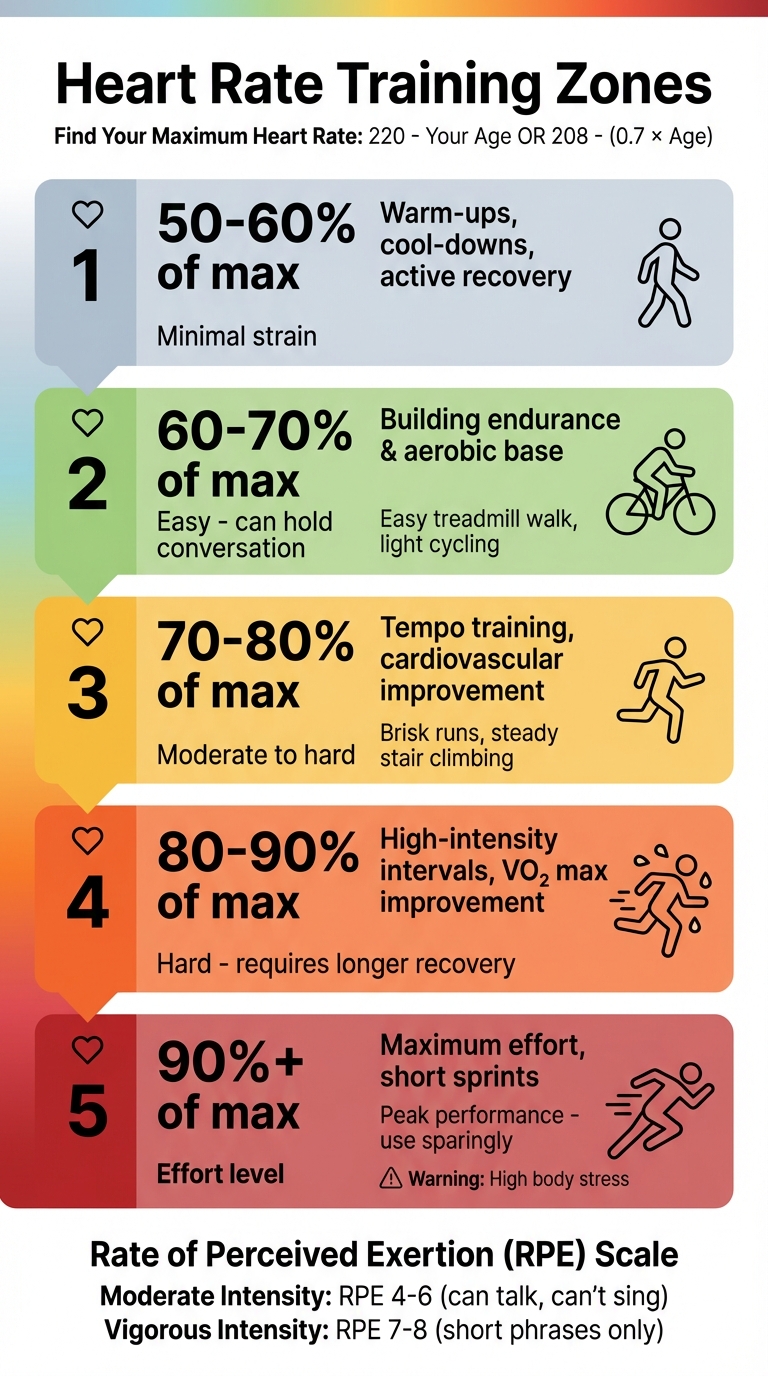
Heart Rate Training Zones Guide for Cardio Workouts
Keeping track of your workout intensity during indoor cardio is crucial to hitting your fitness goals without overdoing it. One of the most reliable ways to measure this is by using heart rate zones. These zones break your effort into five levels, based on a percentage of your maximum heart rate. To estimate your maximum heart rate, you can use the classic formula (220 minus your age) or opt for Tanaka’s formula (208 – 0.7×age) for a more precise calculation. Knowing your intensity levels not only helps you train smarter but also ties directly into recovery strategies discussed later. Let’s dive into the heart rate zones and how they guide your workouts.
Heart Rate Zones Explained
Each heart rate zone has a specific role in your training routine:
- Zone 1 (50–60% of max heart rate): Perfect for warm-ups, cool-downs, and active recovery. This zone allows you to move with minimal strain, making it great for easing into or out of a workout.
- Zone 2 (60–70%): This is the go-to for building endurance. Activities like an easy treadmill walk or light cycling fall here, helping improve your aerobic base while keeping fatigue and strain low.
- Zone 3 (70–80%): Known as the "tempo" zone, this level pushes your cardiovascular system with moderate-to-hard efforts, such as brisk indoor runs or steady stair climbing.
- Zone 4 (80–90%): Ideal for high-intensity intervals and threshold training, this zone can enhance your VO₂ max and overall performance. However, it demands longer recovery periods due to its intensity.
- Zone 5 (above 90%): This is where you give it everything you’ve got – short sprints or peak-effort bursts. Use this zone sparingly since it places a lot of stress on your body.
Tools for Tracking Your Intensity
When it comes to measuring your heart rate, chest-strap monitors are often the most accurate. These devices are especially reliable during high-intensity workouts and can sync with your phone, indoor bikes, or rowing machines. While chest straps excel in precision, wrist-based smartwatches and fitness trackers offer convenience for everyday wear and can automatically detect workouts. However, their optical sensors may struggle with accuracy during quick or intense movements.
Many indoor cardio machines also display helpful metrics like speed, resistance, calories burned, and heart rate. Pair these with the RPE scale (Rated Perceived Exertion, 0–10) and the talk test for a more complete picture. For example, moderate intensity is usually an RPE of 4–6, where you can talk but not sing, while vigorous effort hits an RPE of 7–8, limiting speech to short phrases.
Warning Signs You’re Pushing Too Hard
Your body has ways of letting you know when it’s time to ease up. Stop your workout immediately if you feel chest pain or pressure, severe shortness of breath that doesn’t improve when you slow down, dizziness, faintness, blurred vision, nausea, or sudden sharp pain in your joints or muscles. These are clear signals that your body needs recovery.
If your heart rate stays unusually high even after reducing effort, or if you feel your heart pounding persistently, take a break to hydrate and rest. If these symptoms linger, it’s best to dial back your intensity and allow your body to recover fully before diving back into vigorous cardio.
Recovery Methods for Indoor Cardio Training
To keep making progress with indoor cardio, balancing intense workouts with proper recovery is essential. After a tough session, your body needs time and the right recovery techniques to adapt and rebuild. Active recovery, in particular, can help reduce inflammation and flush out waste products while keeping you gently active. Let’s dive into some effective ways to bounce back after your workouts.
Active Recovery Methods
Active recovery involves light, low-intensity movement instead of complete rest. Some great options include walking on a treadmill, easy cycling on a stationary bike, light elliptical work, or gentle rowing. The goal is to stay in Zone 1 – keeping your effort so light that you can comfortably carry on a conversation.
Right after a challenging workout, try low-intensity cardio on the same machine you used. This helps gradually bring your heart rate down. On designated recovery days, aim for 20–40 minutes of easy activity if you’re a recreational athlete, or 30–60 minutes if you’re more advanced. The key is to keep the intensity very low.
In addition to light cardio, foam rolling can work wonders for sore muscles. Focus on areas like your quads, hamstrings, calves, and glutes to ease tension and reduce soreness. Gentle stretching and mobility exercises are also helpful. Using a yoga mat, you can work on maintaining your joint flexibility and range of motion, which is especially important as you prepare for future, more intense sessions.
sbb-itb-9317277
Creating Workout Plans That Balance Intensity and Recovery
Once you’ve got a good handle on measuring intensity and incorporating active recovery, the next step is crafting a weekly workout plan that balances challenging sessions with easier ones. This mix helps you avoid burnout while keeping your progress steady. Tailor the frequency and intensity of your workouts to your current fitness level, and tweak them as you improve. The recovery techniques mentioned earlier play a key role in ensuring consistent gains.
High-Intensity Interval Training (HIIT) Workout Examples
HIIT workouts are all about alternating between short bursts of intense activity and recovery periods. Here’s how to approach them based on your fitness level:
- Beginners: Start with 1–2 HIIT sessions per week, keeping the total workout time to about 15–20 minutes. For example, do 20 seconds of hard effort (like fast cycling or rowing), followed by 40 seconds of recovery. Repeat this for 8–10 rounds.
- Intermediate: Aim for 2–3 HIIT sessions weekly, lasting 20–30 minutes. Try intervals of 30 seconds hard followed by 30 seconds easy, completing 12–15 rounds.
- Advanced: Push for 3 sessions a week, each lasting 30–40 minutes. Challenge yourself with 40 seconds of hard effort and 20 seconds of recovery, completing 15–20 rounds. Use equipment like a stationary bike or rower, or incorporate bodyweight moves like burpees and mountain climbers.
Low-Intensity Steady State (LISS) Cardio Sessions
LISS cardio is about maintaining a steady, moderate effort – think of it as exercise where you can comfortably hold a conversation. These sessions are great for building endurance and aiding recovery between tougher workouts.
- Beginners: Start with 20–30 minutes of light activity, such as cycling, walking on a treadmill, or easy rowing, 2–3 times per week. Keep your heart rate in a low-to-moderate range.
- Intermediate and advanced: Gradually extend your sessions to 30–45 minutes or more, aiming for 2–4 sessions each week. Slot these workouts after HIIT days or on recovery days. Over time, consistent LISS training boosts your body’s ability to use oxygen, which makes high-intensity efforts feel easier.
Using Periodization for Long-Term Training
To keep your progress on track and avoid hitting a plateau, incorporate periodization into your training. This means varying your workout intensity and volume over time. For example, an intermediate indoor cardio schedule could look like this:
- Monday: HIIT
- Tuesday: LISS
- Wednesday: Active recovery (light movement)
- Thursday: HIIT
- Friday: LISS
- Saturday: Optional LISS or strength training
- Sunday: Full rest
This setup balances two intense days with recovery-focused sessions and ensures you get at least one full rest day each week. Adjust the plan as you progress, but always prioritize recovery. Building a strong aerobic base with low-intensity Zone 1–2 work can also improve your VO₂ max, enabling you to train harder over time without risking overtraining.
Tracking Progress and Preventing Overtraining
Key Metrics to Monitor Your Performance
Keeping tabs on the right data points can help you figure out if your training plan is working or if it’s time to make some tweaks. Start with your resting heart rate – check it every morning. If it’s higher than usual, it may mean you need extra recovery time. Another critical number to watch is heart rate recovery. After a tough interval, note how quickly your heart rate drops in the first 1–2 minutes. If it’s slower than normal, it could be a sign that your body hasn’t fully recovered and might benefit from lighter sessions or more rest.
For endurance improvements, track how far or how much output you can sustain at a steady heart rate or effort level. If you notice you can run, row, or cycle farther at the same effort over time, that’s a good sign your fitness is improving. Many fitness trackers and cardio machines also estimate VO₂ max, which measures your aerobic capacity. A rising VO₂ max suggests your training is paying off, but if it plateaus and you’re feeling constantly tired, it might signal overreaching.
Don’t forget to log other important factors like perceived exertion, sleep quality, and mood. If your workouts start feeling harder than usual or your mood dips, it’s a red flag that your body might need more recovery time. These metrics aren’t just about tracking progress – they’re also your early warning system for overtraining.
Identifying and Fixing Overtraining Problems
When these metrics show a downward trend, it might mean you’re heading toward overtraining. Overtraining happens when your body doesn’t get enough recovery to handle the stress of your workouts. Common signs include ongoing fatigue, a drop in performance, irritability, poor sleep, and a higher risk of illness or injury. To address this, scale back on high-intensity sessions and add more low-intensity workouts in Zones 1–2. Scheduling regular deload weeks – where you reduce overall training load – can also help restore balance.
Another simple way to help your body recover is to include 6–10 minutes of active recovery after intense sessions. Activities like light walking or easy cycling can reduce soreness and speed up recovery. If these adjustments don’t resolve your symptoms, it’s a good idea to consult a healthcare professional or certified trainer for guidance.
Adjusting Your Routine Based on Results
Keeping a training log or using a fitness app is an excellent way to track your progress. Record details like session duration, intensity, heart rate, perceived exertion, and how you’re feeling overall. Reviewing this data weekly can reveal patterns – like stacking too many high-intensity workouts without enough recovery – that might call for changes.
If you notice slower heart rate recovery, rising perceived exertion, or dips in mood and sleep quality, it’s time to dial back the intensity and add more rest days. Adjust your routine not just based on performance data but also in response to your personal goals and life circumstances. For instance, during stressful periods or when sleep is poor, swapping intense workouts for steady, low-intensity cardio can be more effective.
If endurance is your focus, regularly check markers like how far you can go during a 20- to 30-minute session at a steady heart rate. This can help you confirm that your adjustments are moving you in the right direction. The key is to listen to both the numbers and your body, making changes early to avoid turning small issues into bigger setbacks.
Conclusion
Indoor cardio training thrives on a balance of effort and recovery. Intense workouts help build endurance and strength, while proper recovery ensures your body adapts, reducing the risk of burnout, injury, or hitting a plateau.
This guide emphasizes tools like heart rate zones, RPE (Rate of Perceived Exertion), and performance metrics to help you manage your training load. By tracking indicators such as resting heart rate, heart rate recovery, and perceived exertion, you can spot signs of overtraining early. Incorporating low-intensity cardio – about 30 minutes, three times a week – can strengthen your aerobic base while easing inflammation and lowering stress hormones like cortisol. These strategies work for everyone, regardless of fitness level.
For beginners, the focus might be on building a solid base through steady-state cardio and gradually increasing intensity. More experienced athletes can use periodization techniques to alternate between high-effort phases and deliberate recovery periods, fine-tuning their performance.
Recovery isn’t just rest – it’s when your body rebuilds and strengthens. Progress happens during recovery, not just during workouts. By giving equal importance to both training and rest, you can maintain consistency, avoid setbacks, and keep moving toward your fitness goals.
FAQs
What’s the best way to balance high-intensity cardio workouts with recovery days?
Finding the right mix of intense cardio sessions and recovery days begins with tuning in to your body. Notice signals like fatigue, muscle soreness, or a dip in performance – these are often your body’s way of asking for a break.
Make sure to include planned rest or active recovery days in your schedule and switch up the intensity of your workouts during the week. For instance, balance high-intensity exercises with lighter, restorative activities. Keeping track of your progress can also reveal trends, helping you tweak your routine to prevent overtraining while still achieving your goals.
How can I monitor my workout intensity to avoid overtraining?
To keep tabs on your workout intensity, a heart rate monitor can be a handy tool, helping you stay within your ideal heart rate zones. Alternatively, the Rate of Perceived Exertion (RPE) scale offers a simple way to measure how hard you’re working based on your own physical sensations. Another helpful tip? Maintain a workout log. It’s a practical way to spot trends, track your progress, and ensure you’re balancing effort with recovery.
Don’t ignore what your body is telling you. Persistent fatigue, trouble sleeping, or a drop in performance could be signs of overtraining. Make rest days a priority and tweak your routine as needed to stay on track and maintain a healthy balance.
What is active recovery, and why should I include it in my cardio routine?
Active recovery involves engaging in light, low-intensity activities that keep your body moving while aiding recovery. It plays a key role in easing muscle soreness, improving blood flow, and helping to avoid overtraining.
Incorporating active recovery into your routine can be simple. On rest days or after a tough cardio session, opt for activities like walking, gentle stretching, or yoga. These exercises not only support recovery but also help maintain flexibility and keep fatigue at bay.