
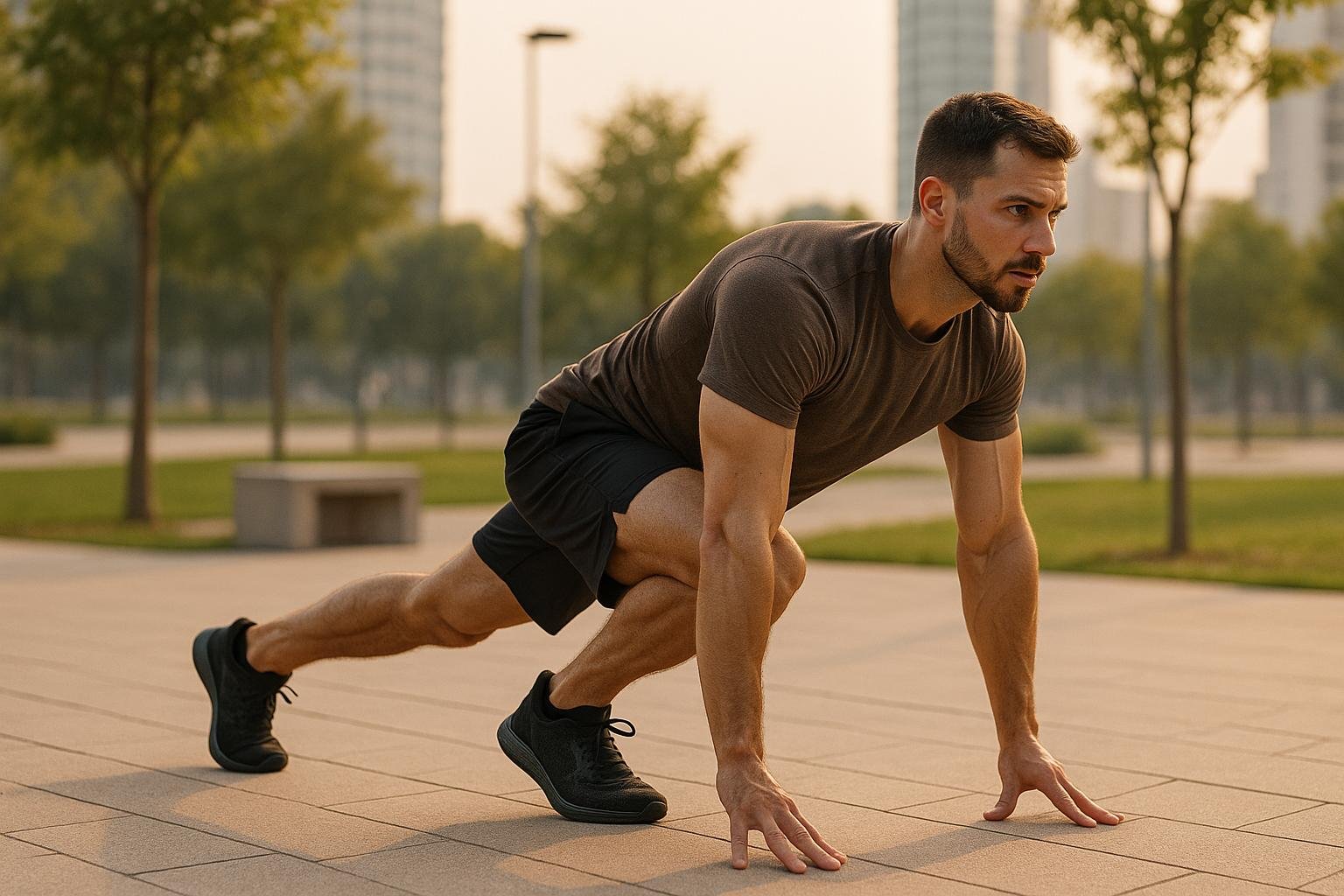
Intermediate calisthenics training builds strength, improves flexibility, enhances coordination, and boosts cardiovascular health – all without requiring a gym or equipment. It’s a step up from basic exercises, offering more challenging variations like diamond push-ups or pistol squats. This approach focuses on full-body movements, progressive overload, and dynamic routines that deliver results comparable to weightlifting.
Key insights include:
- Strength & Endurance: Studies show push-up performance can improve by over 30% in 10 weeks.
- Flexibility & Mobility: Dynamic exercises naturally increase joint range of motion.
- Heart Health & Metabolism: High-intensity calisthenics improves VO₂peak and lowers LDL cholesterol.
- Mental Health: Reduces stress and builds confidence through mastering new skills.
To get started, aim for 3–5 sessions per week, lasting 30–60 minutes. Use progressive overload techniques like modifying leverage or increasing reps to keep challenging your body. Whether you’re targeting strength, endurance, or mobility, intermediate calisthenics is a practical and effective way to level up your fitness.
20 Best Intermediate Calisthenics Exercises | + Workout Plan
Physical Benefits of Intermediate Calisthenics
Intermediate calisthenics offers a wealth of physical benefits, all supported by solid research. These exercises not only enhance strength, flexibility, and coordination but also prepare the body for even greater performance improvements. Let’s dive into how these benefits unfold.
Muscle Strength and Endurance Gains
Intermediate calisthenics delivers noticeable gains in both strength and endurance. A 10-week study involving 183 college students found impressive results: female participants increased their push-ups from 10.80 to 24.50 reps and extended their wall sit duration from 48.90 to 112.34 seconds. Male participants also showed significant improvement, boosting their wall sit times from 58.15 to 83.88 seconds.
What’s particularly striking is that progressive calisthenic push-up training can yield upper body strength gains comparable to traditional weightlifting methods like the bench press, especially for those at beginner and intermediate levels. This challenges the idea that weights are essential for building serious strength.
Exercises such as diamond push-ups, wide-grip pull-ups, and single-leg squats are perfect for intermediate practitioners. By tweaking leverage, adjusting tempo, and increasing movement complexity, these exercises provide the stimulus needed for continued strength development.
Better Flexibility and Mobility
Flexibility and mobility naturally improve with intermediate calisthenics, thanks to its dynamic, movement-focused approach. Movements like inchworms and lunges with a twist not only build strength but also enhance flexibility. When combined with stretching, calisthenics can significantly increase joint range of motion and muscular elasticity.
This dual benefit arises because calisthenics often requires a full range of motion under load. Unlike traditional weightlifting, which can isolate muscles and limit movement, bodyweight exercises integrate flexibility into the training itself.
As you progress to more advanced calisthenics skills, the mobility demands increase. This creates a cycle where improved flexibility enables you to tackle harder movements, which in turn further enhances your mobility. Improved mobility also supports better balance and coordination, making it a key component of overall physical development.
Better Coordination and Balance
Intermediate calisthenics also sharpens coordination and balance, with research showing significant improvements in these areas – particularly in the lower body – among sedentary women who completed a calisthenics program.
Movements like planks, hollow holds, and hanging leg raises are especially effective for building core stability and improving posture. Advanced skills, such as the L-sit or handstand, take this a step further by challenging your proprioception (your body’s ability to sense and control its position in space).
Unlike machine-based exercises that stabilize you externally, calisthenics forces your nervous system to coordinate multiple muscle groups while maintaining balance. This not only enhances your physical control but also translates to better performance in everyday activities and sports. Improved balance reduces the risk of falls, while better coordination leads to smoother, more efficient movement patterns.
The progressive nature of intermediate calisthenics ensures that as the exercises become more complex, your coordination and balance continue to improve. This makes the benefits long-lasting and sustainable, setting it apart from other forms of training.
Heart Health and Metabolic Benefits
Intermediate calisthenics isn’t just about building strength and coordination – it also plays a big role in improving heart health and metabolic function. Research highlights how bodyweight exercises can boost cardiovascular health and positively impact key metabolic markers, setting the stage for long-term wellness. Let’s dive into the specific ways it supports your heart and metabolism.
Aerobic Fitness Improvements
Intermediate calisthenics can significantly enhance cardiovascular fitness, especially when done using interval or circuit training techniques. High-intensity routines, like those involving burpees, mountain climbers, or jump squats, engage both aerobic and anaerobic energy systems. This dual engagement leads to better heart health and greater endurance over time.
Studies have shown that structured calisthenics programs improve VO₂peak – an important measure of aerobic capacity – and overall endurance. For example, incorporating 30-second bursts of intense activity followed by 15-second rest periods has been shown to push both energy systems, resulting in better running speed, aerobic endurance, and cardiovascular performance.
What makes calisthenics stand out is how it combines strength and cardio into one workout. By engaging large muscle groups and maintaining an elevated heart rate, it delivers a time-efficient alternative to traditional steady-state cardio. Over time, participants often report lower blood pressure and improved breathing control during exercise, further enhancing their cardiovascular health.
Metabolic Health Improvements
The metabolic perks of intermediate calisthenics go well beyond simply burning calories during a workout. Studies on individuals with dyslipidemia reveal that combining aerobic exercises with calisthenics can lead to better LDL-C (bad cholesterol), HbA1c (a marker of blood sugar control), and cardiorespiratory fitness compared to aerobic exercise alone.
While aerobic-only routines improve HDL-C (good cholesterol) and some cardiovascular markers, adding calisthenics amplifies the overall metabolic benefits. The best part? You don’t need fancy equipment or a gym membership – calisthenics is accessible to nearly everyone. For example, a 10-week whole-body calisthenics program for college students improved both muscular endurance and aerobic fitness markers.
To reap these benefits, aim for three sessions per week, each lasting 30–45 minutes. Include a mix of high-intensity intervals and moderate, steady-state exercises. Consistency is key, along with gradually increasing the intensity, duration, or complexity of your workouts to keep challenging your body and improving your cardiovascular and metabolic systems.
sbb-itb-9317277
Mental Health Benefits
Intermediate calisthenics doesn’t just strengthen your body – it can also work wonders for your mental well-being. Studies indicate that adding bodyweight exercises to your routine can help ease stress and boost self-confidence through focused, repetitive movements.
Lower Stress and Anxiety
Engaging in intermediate calisthenics can be an effective way to manage stress. The rhythmic, repetitive nature of these exercises often brings about a meditative state, helping to quiet anxious thoughts and promote relaxation. This sense of flow and control during workouts can gradually lead to a noticeable reduction in stress levels, creating space for further mental and emotional benefits.
Higher Self-Confidence
Learning and mastering new calisthenics moves can do more than just improve your physical abilities – it can also build your self-confidence. Each skill you conquer serves as proof of your growing strength and capabilities, reinforcing a positive self-image and a belief in what you can achieve.
Training Tips for Intermediate Practitioners
To keep progressing in your fitness journey, it’s essential to structure your routine thoughtfully and continuously challenge yourself with more advanced movements.
Progressive Overload Techniques
If you want to keep building strength and muscle through calisthenics, progressive overload is your go-to strategy. This means gradually increasing the challenge your muscles face. While weightlifters can just add more plates, calisthenics requires a different approach to ramp up the difficulty.
One of the most effective methods is leverage modification. By altering your body position, you can make exercises significantly harder. For instance, instead of doing regular push-ups, you can move to archer push-ups, which shift more weight to one arm. From there, you can aim for one-arm push-ups. Similarly, regular squats can evolve into pistol squats, which demand much more strength and balance from your legs and core.
Other ways to increase intensity include:
- Adding reps or sets to your routine
- Shortening rest periods between exercises
- Incorporating movement complexity, like turning a basic plank into a more challenging variation by adding shoulder taps or lifting one leg
These techniques are highly adaptable, allowing you to adjust based on how you’re feeling each day. Once you’ve chosen your progression methods, stick to a consistent schedule to see steady improvements.
Best Training Frequency and Duration
How often and how long should you train? Research suggests that three to five sessions per week is ideal for intermediate practitioners aiming to build strength and endurance.
Take, for example, a 10-week study involving collegiate students who trained three times a week. Their push-up performance increased from an average of 18.17 to 24.50 reps, their planking endurance improved from 79.85 to 107.87 seconds, and their wall sit times jumped from 83.88 to 112.34 seconds.
Aim for 45 to 60 minutes per session to allow for well-rounded development. If you’re short on time, you can still get great results with 30-minute high-intensity circuits. These shorter sessions, especially with minimal rest, are excellent for boosting cardiovascular fitness and metabolic health.
Remember, consistency beats intensity. Training three times a week regularly will yield far better results than sporadic, overly intense sessions. Your body thrives on steady, repeated stimulus combined with proper recovery.
Exercise Selection for Targeted Results
Once you’ve nailed down your schedule, the next step is choosing exercises that align with your goals. Whether you’re aiming for strength, endurance, or mobility, selecting the right movements is key to making the most of your training time.
- For strength gains, focus on compound exercises that work multiple muscle groups. Push-ups, pull-ups, dips, and pistol squats should be staples in your routine. These exercises allow for clear progression and, when paired with progressive overload, can deliver muscle growth on par with traditional weight training.
- For cardiovascular endurance and fat loss, go for dynamic, high-energy movements. Exercises like burpees, mountain climbers, and jump squats are fantastic for getting your heart rate up while still offering strength benefits. Circuit training with short rest intervals – such as 30 seconds of work followed by 15 seconds of rest – effectively trains both your aerobic and anaerobic systems.
- For core stability and balance, static holds like planks, L-sits, and single-leg stands are excellent. These exercises strengthen your core while improving overall body coordination and control.
Don’t forget about flexibility and mobility work. Dynamic stretches before your workout help prepare your body for movement, while static stretching afterward (holding each stretch for 15 to 30 seconds) aids recovery and improves your range of motion. This combination not only reduces the risk of injury but also enhances the quality of your movements.
Key Takeaways from Research
Intermediate calisthenics offers proven benefits for building strength, boosting endurance, and improving mental health. Studies show that this form of exercise can enhance both your physical and mental well-being, with results comparable to those achieved through traditional gym-based workouts.
Why Intermediate Calisthenics Is Worth Pursuing
Research reveals that progressive bodyweight exercises can produce muscle strength and growth similar to traditional weightlifting, especially for beginners and intermediate levels. This means you can develop strength and muscle without the need for a gym membership or fancy equipment.
The cardiovascular benefits are also impressive. One study focusing on adults with dyslipidemia found that combining aerobic exercises with calisthenics led to greater improvements in VO2peak and METmax than aerobic training alone. These metrics reflect your body’s efficiency in using oxygen during exercise, a key indicator of fitness and heart health.
Additionally, a 10-week study involving college students showed significant gains in functional strength. This translates to better performance in everyday tasks. On top of the physical perks, calisthenics also supports mental health by reducing stress and boosting self-confidence.
Next Steps for Readers
To put these insights into action, start by evaluating your current fitness level and setting achievable goals that align with the gradual progression of calisthenics. Whether you’re mastering push-ups or aiming for advanced moves, there’s always room to grow.
Create a balanced workout routine that targets all major muscle groups and gradually increase the challenge using progressive overload techniques. Track your progress by recording metrics like the number of repetitions, plank durations, or wall sit times.
For expert advice and structured plans, platforms like Indoor Cardio Pro offer valuable resources, including technique guides, safety tips, and progression strategies. These tools can help you apply research-backed methods effectively and safely.
Finally, consistency is key. Studies highlight that training three to five times a week yields noticeable improvements while allowing adequate recovery. Start at your own pace, use the research as your guide, and trust the process to achieve steady, science-backed progress.
FAQs
What are the benefits of intermediate calisthenics compared to traditional weightlifting for building strength and muscle?
Intermediate calisthenics and traditional weightlifting both help you build strength and muscle, but they take different paths to get there. Calisthenics relies on your own body weight for resistance, which not only boosts functional strength but also enhances balance and flexibility. Plus, it’s super accessible – no fancy equipment needed. You can get creative with full-body workouts almost anywhere.
Weightlifting, in contrast, uses tools like dumbbells and barbells to zero in on specific muscle groups. This makes it perfect for packing on muscle mass and developing raw strength. Deciding between the two really comes down to your fitness goals. If you’re aiming for better body control and endurance, calisthenics might be your go-to. But if building bigger muscles and maximizing strength is the plan, weightlifting has the edge.
What are some effective ways to apply progressive overload in calisthenics for steady improvement?
Progressive overload in calisthenics is all about steadily increasing the challenge of your exercises to push your muscles and encourage growth. Here are a few ways to make that happen:
- Add more reps or sets: As you gain strength, gradually increase the number of repetitions or sets in your routine. This simple adjustment can make a big difference.
- Change your leverage: Tweaking your body position can make exercises tougher. For instance, progress from knee push-ups to full push-ups, or move from tucked planche holds to straddle planche holds.
- Incorporate extra weight: Adding resistance with tools like a weighted vest or ankle weights can intensify exercises like pull-ups or dips.
The key to success? Stay consistent and focus on proper form to avoid injuries and keep making steady progress.
How does intermediate calisthenics help reduce stress and improve self-confidence?
Intermediate calisthenics offers more than just physical perks – it can be a game-changer for mental health. Regular exercise helps lower cortisol, the stress hormone, while triggering the release of endorphins. These "feel-good" chemicals naturally lift your mood and promote a sense of well-being.
On top of that, progressing in calisthenics – whether it’s nailing a challenging move or hitting a fitness goal – brings a real sense of achievement. This steady progress can boost self-esteem and confidence in a big way. Plus, the discipline and focus required for intermediate-level training provide a healthy way to tackle everyday stress and challenges.