

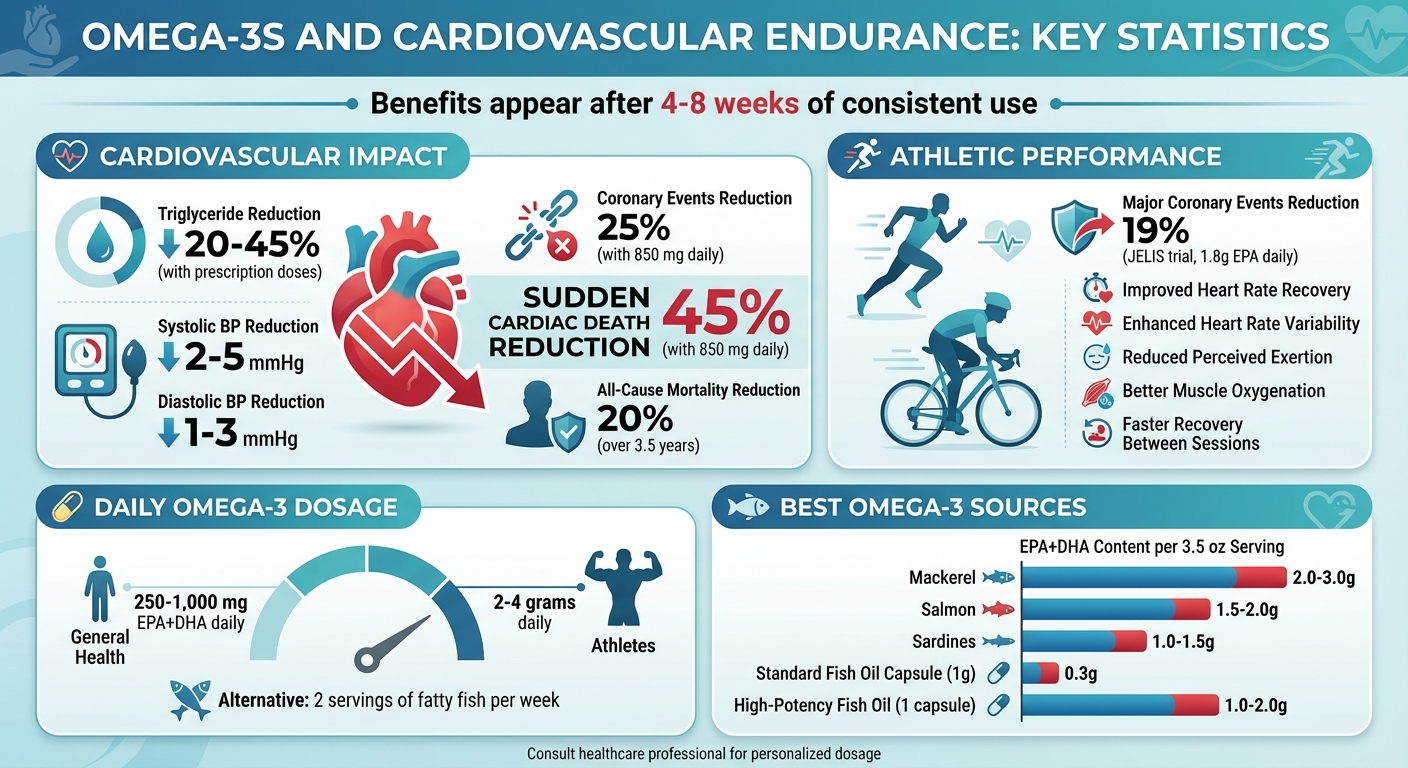
Omega-3 fatty acids, specifically EPA and DHA, directly support heart health and endurance. They lower triglycerides, improve cholesterol balance, reduce blood pressure, and enhance blood flow during exercise. These fats also stabilize heart rhythms, reduce inflammation, and speed up recovery after workouts. Research shows that consuming 850 mg of omega-3s daily can lower coronary events by 25% and sudden cardiac death by 45%. For athletes and fitness enthusiasts, omega-3s improve oxygen delivery, reduce fatigue, and allow for longer, more efficient cardio sessions. To maximize benefits, aim for two servings of fatty fish per week or consider supplements providing 250–1,000 mg of EPA and DHA daily.
Omega-3 Benefits for Heart Health and Exercise Performance
Does omega-3 reduce cardiovascular disease? Comparing major trials REDUCE IT, VITAL, and STRENGTH

How Omega-3s Improve Heart Health
A healthy heart is the cornerstone of stamina, especially during indoor workouts. Omega-3 fatty acids play a key role in supporting heart health through various mechanisms that directly enhance cardiovascular performance. These fatty acids integrate into cell membranes – whether in blood vessels, heart tissue, or the liver – resulting in noticeable improvements in how your heart and circulatory system function.
The benefits are wide-ranging: lowering triglycerides (by as much as 20%–45% with prescription doses), improving arterial flexibility, reducing systolic blood pressure by 2–5 mmHg, and calming inflammation within artery walls. Research shows that omega-3s significantly reduce the likelihood of coronary events and sudden cardiac death, leading to a more efficient heart. This means better oxygen delivery and performance during intense workouts, whether you’re pushing through a treadmill session or rowing at full tilt.
Lowering Triglycerides and Balancing Cholesterol
Omega-3s are highly effective at reducing triglycerides by decreasing the production of very low-density lipoproteins (VLDL) and speeding up their clearance from the body. Prescription doses of 2–4 grams daily can cut triglycerides by 20%–45%, with the biggest improvements seen in people with very high levels. For instance, someone with fasting triglycerides of 250 mg/dL may see levels drop to 150–200 mg/dL under proper medical guidance.
When it comes to cholesterol, the effects are more modest. Omega-3s can slightly raise HDL (the "good" cholesterol) and may cause a small increase – around 2.5% – in LDL (the "bad" cholesterol). However, the LDL particles tend to be less harmful, and the overall cardiovascular risk decreases. The triglyceride-lowering and anti-inflammatory benefits of omega-3s far outweigh any minor changes in LDL. As a result, omega-3s work well alongside other cholesterol management strategies, creating a solid foundation for better blood pressure and circulation during exercise.
Improving Blood Pressure and Circulation
Omega-3s don’t just improve your lipid profile – they also enhance blood flow and circulation. By improving endothelial function and increasing nitric oxide production, they help relax blood vessels and reduce resistance to blood flow. This leads to greater arterial elasticity and smoother circulation. Studies have shown that omega-3s can lower systolic blood pressure by 2–5 mmHg and diastolic pressure by 1–3 mmHg, particularly in people with hypertension or elevated baseline readings. Even these small improvements can reduce the risk of strokes and heart attacks.
In addition, omega-3s have antithrombotic properties, meaning they reduce platelet aggregation. This helps maintain proper blood flow, especially during exercise, which is critical for anyone engaging in cardio-intensive activities like running or cycling indoors.
Reducing Inflammation and Preventing Atherosclerosis
Omega-3s, specifically EPA and DHA, act as building blocks for specialized molecules that resolve inflammation and help tissues recover. By competing with omega-6 fats for the same enzymes, omega-3s shift the balance away from pro-inflammatory compounds and toward anti-inflammatory ones. At the arterial level, this means reduced activation of inflammatory cells, lower cytokine production, and less oxidative stress – all factors that slow the development of atherosclerosis.
Clinical evidence supports these benefits. For example, the Japan EPA Lipid Intervention Study (JELIS), which followed 18,645 patients taking 1.8 grams of EPA daily alongside statins, found a 19% drop in major coronary events compared to statin therapy alone. Another large trial using 4 grams per day of icosapent ethyl reported a 25% reduction in a composite risk of cardiovascular death, nonfatal heart attacks, strokes, revascularization, or unstable angina over nearly five years. This anti-inflammatory effect is crucial for maintaining healthy arteries, which in turn improves oxygen delivery and boosts exercise performance over time.
How Omega-3s Affect Exercise Performance
Omega-3s are well-known for supporting heart health, but they also play a key role in improving exercise performance. By helping to stabilize heart rate and enhance blood flow, these fatty acids can lower heart rates, speed up recovery, and improve oxygen delivery. For those who enjoy indoor cardio like cycling, rowing, or treadmill running, these benefits can lead to longer workouts and less fatigue.
EPA and DHA, two vital omega-3s, integrate into the membranes of cardiovascular cells, making the heart and blood vessels function more efficiently under the stress of exercise. This cellular-level improvement not only boosts cardiac performance but also helps your body recover more quickly between training sessions. These changes directly enhance overall exercise capacity.
Improving Heart Rate and Recovery
Omega-3s are known to lower resting heart rate and improve heart rate recovery (HRR) – how quickly your heart rate returns to normal after exercise. This happens because omega-3s improve parasympathetic tone and increase heart rate variability, allowing your heart to transition more efficiently between exertion and rest. This adaptation can also reduce the risk of arrhythmias during intense physical activity.
The GISSI trial highlighted the long-term cardiovascular benefits of omega-3s. Participants who took 850 mg of EPA and DHA daily saw a 45% reduction in sudden cardiac death and a 20% reduction in all-cause mortality over 3.5 years. While this study focused on cardiac patients, the mechanisms at work – such as enhanced cardiac efficiency – can also benefit healthy individuals. Animal studies further suggest that omega-3s may protect against exercise-induced cardiac stress by preventing ischemia-induced fibrillation.
A lower resting heart rate is a marker of improved cardiovascular fitness, while faster HRR indicates better recovery capacity. Together, these benefits help build endurance and allow your body to use oxygen more effectively during exercise.
Reducing Perceived Exertion and Improving Oxygen Use
Omega-3s can make moderate workouts feel less demanding by improving how your body utilizes oxygen. This is partly due to enhanced endothelial function and vasodilation, which facilitate better exchange of substances at the capillary level.
Additionally, omega-3s improve the flexibility of red blood cells, enabling them to move more easily through narrow capillaries and deliver oxygen more efficiently. They also play a role in muscle remodeling after endurance exercise, helping your body adapt better to training stress.
Increasing Blood Flow and Muscle Oxygenation
Omega-3s further support exercise performance by optimizing blood flow during physical activity. By widening blood vessels and reducing resistance, omega-3s enhance oxygen delivery to muscles. This ensures that your muscles receive a steady supply of oxygen and nutrients during workouts.
For endurance athletes and regular fitness enthusiasts, these improvements in blood flow and oxygenation can make it easier to sustain higher intensities for longer periods, ultimately boosting overall performance.
sbb-itb-9317277
Research on Omega-3s and Endurance Performance
Studies on Omega-3 Supplementation in Athletes
Extensive research highlights how omega-3s can enhance cardiovascular health, which is vital for endurance athletes. Take the JELIS trial, for example. This study tracked 18,645 participants who supplemented with 1.8 g of EPA daily and observed a 19% reduction in major coronary events over nearly five years. While the trial focused on cardiovascular health, its findings – such as reduced cardiac stress and improved heart efficiency – are also relevant to athletes aiming to optimize performance.
Other studies build on these results, showing how higher omega-3 levels in red blood cells benefit endurance athletes. These advantages include improved capillary exchange, greater flexibility of red blood cells, and faster muscle recovery after prolonged exercise sessions. Together, these findings point to omega-3s as a valuable tool for boosting athletic performance.
Heart Rate and Recovery Improvements in Trained Individuals
Short-term studies reveal that omega-3 supplementation can deliver measurable benefits in just weeks. Research involving cyclists and triathletes who took around 1.6 g of EPA and DHA daily for eight weeks showed lower heart rates at the same submaximal workload and quicker recovery of heart rate after exercise.
Similarly, a controlled study with recreationally trained men who consumed about 3 g of EPA and DHA daily for six weeks demonstrated improved heart rate variability and reduced submaximal heart rates. These changes indicate better parasympathetic function, which helps the body recover more efficiently between training sessions. This quicker recovery allows athletes to sustain higher training volumes without risking overtraining. These heart rate improvements, combined with the cardiovascular benefits, provide a solid foundation for longer and more effective endurance training.
Benefits for Muscle and Mitochondrial Function
Omega-3s don’t just support the heart – they also play a crucial role in muscle performance and energy production, both essential for endurance. In one study, older adults who supplemented with 1.86 g of EPA and 1.5 g of DHA daily for six months experienced increased mitochondrial oxidative capacity and improved muscle function compared to those taking a placebo. These improvements were linked to enhanced gene expression related to mitochondrial activity and fat oxidation, which help athletes use energy more efficiently during prolonged efforts.
Additionally, omega-3 supplementation has been shown to reduce markers of muscle damage, such as creatine kinase, IL-6, and TNF-α, following intense exercise. This translates to less soreness and quicker recovery times. By enhancing the fluidity of muscle cell membranes and supporting cellular signaling, omega-3s enable the body to better adapt to training stress, helping athletes maintain peak performance over the long term.
How to Add Omega-3s to Your Diet for Better Endurance
To get the most out of omega-3s for endurance and heart health, it’s important to include them thoughtfully in your diet.
Best Food Sources of Omega-3s
Cold-water fatty fish are some of the best sources of EPA and DHA, the omega-3s most associated with endurance benefits. For example, a 3.5-ounce serving of salmon contains about 1.5–2.0 grams, while mackerel provides 2.0–3.0 grams, and sardines offer 1.0–1.5 grams. These amounts match the research-backed daily intake of 1–2 grams for cardiovascular benefits.
Plant-based sources like flaxseeds, chia seeds, and walnuts are rich in ALA, another type of omega-3. However, the body only converts about 5–10% of ALA into EPA and DHA. While these foods are great additions to your diet, they can’t fully substitute fish when it comes to endurance benefits. Eating fish twice a week along with daily servings of plant-based options can help you reach the intake levels linked to improved heart rate recovery and fewer cardiac issues.
Omega-3 Supplement Dosage Guidelines
For general heart health and endurance, most healthy adults benefit from 250–1,000 mg of combined EPA and DHA daily. Athletes aiming to boost recovery and performance often take 2–4 grams daily, which aligns with studies showing improvements in heart rate variability and faster recovery times. In fact, one cardiology review highlighted that 850 mg per day reduced coronary heart disease events by 25% and sudden cardiac death by 45%.
| Source | Serving Size | EPA+DHA (g) |
|---|---|---|
| Salmon | 3.5 oz | 1.5–2.0 |
| Mackerel | 3.5 oz | 2.0–3.0 |
| Sardines | 3.5 oz (canned) | 1.0–1.5 |
| Standard Fish Oil Capsule | 1 g | 0.3 |
| High-Potency Fish Oil | 1 capsule | 1.0–2.0 |
| Algal Oil | 1 capsule | 0.2–0.5 |
Most standard fish oil capsules provide about 300 mg of EPA and DHA per gram, so checking the label is key. High-potency capsules, which can deliver 1–2 grams per pill, reduce the number you need to take daily. Look for products certified by third-party testing to ensure purity and safety from heavy metals. Over-the-counter fish oil is affordable, typically costing $0.05–$0.20 per day.
Timing Omega-3 Intake with Your Exercise Routine
To maximize the benefits, timing matters almost as much as dosage. Taking omega-3s with a meal that contains fat boosts absorption up to threefold and reduces any fishy aftertaste. Athletes often take their omega-3s with the meal closest to their workout. For those focusing on indoor cardio like treadmill running, cycling, or HIIT, consistency in daily intake is more important than exact timing.
It’s worth noting that omega-3s don’t work like a quick fix. Heart rate recovery, blood flow, and muscle function improve with consistent daily use over 4–8 weeks, not from taking a capsule right before a workout. To keep things manageable, consider splitting your dose between morning and evening to improve tolerance and maintain steady levels in your system.
Conclusion
Omega-3 fatty acids, especially EPA and DHA, play a vital role in enhancing cardiovascular endurance and exercise performance. They help lower triglycerides, slightly improve blood pressure, reduce inflammation, and boost circulation – all of which contribute to better performance. On top of that, omega-3s support heart rate recovery and increase heart rate variability, aiding in faster recovery after cardio sessions.
Studies suggest that consuming 850 mg of omega-3s daily can lower the risk of sudden cardiac death by 45% and reduce all-cause mortality by 20%. Similarly, taking 1.8 g of EPA daily has been linked to a 19% reduction in major coronary events.
To reap these benefits, aim for two servings of fatty fish per week or consider a high-quality supplement providing 250–1,000 mg of EPA and DHA daily. Athletes should consult a healthcare professional to determine the optimal dose for their specific needs.
By incorporating omega-3s into your diet, you can build a stronger cardiovascular system and improve your workout performance. Whether you’re tackling indoor cardio sessions or other endurance activities, these fatty acids can support consistent training, better recovery, and balanced nutrition. Over time, you might notice your heart responding more efficiently to exercise and recovering quicker between sessions.
Start small – try adding a serving of salmon or a fish oil supplement to your daily routine. With better heart health and recovery, omega-3s can help take your endurance and cardio workouts to the next level.
For more insights on boosting your indoor cardio performance, check out additional resources on Indoor Cardio Pro.
FAQs
How do omega-3 fatty acids boost cardiovascular endurance during exercise?
Omega-3 fatty acids play a key role in boosting cardiovascular endurance during exercise. They work by encouraging better blood flow, cutting down on inflammation, and supporting overall heart function. This means your heart can pump more effectively, allowing you to stay active for extended periods without tiring as quickly.
On top of that, omega-3s may help improve oxygen delivery to your muscles. This extra oxygen can give your stamina and workout performance a noticeable lift.
What is the recommended daily amount of omega-3s for athletes to enhance performance?
Athletes aiming to enhance their performance often find that a daily intake of 1,000 to 3,000 milligrams of combined EPA and DHA omega-3 fatty acids can be beneficial. In some cases, studies indicate that doses up to 4,000 milligrams may also be safe, provided they are taken under the guidance of a healthcare professional.
To ensure you’re taking the appropriate amount for your individual needs – especially if you have existing health concerns or are considering higher doses – it’s essential to consult with a healthcare provider.
Do plant-based omega-3s offer the same cardiovascular and endurance benefits as fish-based omega-3s?
Yes, plant-based omega-3s, such as those found in algae and flaxseed, can offer similar benefits to fish-based sources. These alternatives provide EPA and DHA, two essential omega-3 fatty acids known for supporting heart health, enhancing blood flow, and aiding exercise performance. While fish remains a popular source, plant-based options are an excellent choice for individuals following vegetarian or vegan lifestyles.